
Rockwall City Directory Collections
Research did not locate a verified Rockwall city-directory title, publisher, or year run in the inspected official sources. That is a real finding, not an invitation to supply a likely publisher or a guessed span. The County Library, Texas State Library and Archives Commission, and Historical Foundation Museum provide the practical search path. Start with a catalogue search by place and year, then ask whether the result is an image, an index, or only a catalogue record. A verified volume should be cited by title, publisher, year, page, and section.
| Collection | Years or status | Where held | Access |
|---|---|---|---|
| Rockwall city-directory titles | Exact run not located in official sources. | County Library and archival catalogue research path. | Verify a title, publisher, year, and page before use. |
| Rockwall Success microfilm | Scattered 1886 issues; 1940–41; 1946–65; 1968–92; parts of 1996–2000. | County Library Genealogy and Periodical Room. | Self-service reader; 1966/67 reel missing; copies are 15 cents. |
| Other local newspapers | Chronicle 1997–99; Express 2001–02; two 2000–02 news runs. | County Library microfilm. | Check the exact issue and reel at the library. |
| Deed and tax records | Kaufman-transcribed deeds 1848–73; Rockwall deeds 1873–1901; tax rolls 1873–1910. | County microfilm and TSLAC reels. | Reel and volume research; these are not modern resident lists. |
| Museum books and family collections | Item-specific dates and coverage. | Historical Foundation Museum. | Visit or contact; cite the title, page, or collection. |
The Texas State Library and Archives Commission’s Texas city-directories guide is a useful statewide finding aid, but it does not prove that a Rockwall volume is present. The search should end at the holding institution’s record or a photographed page.
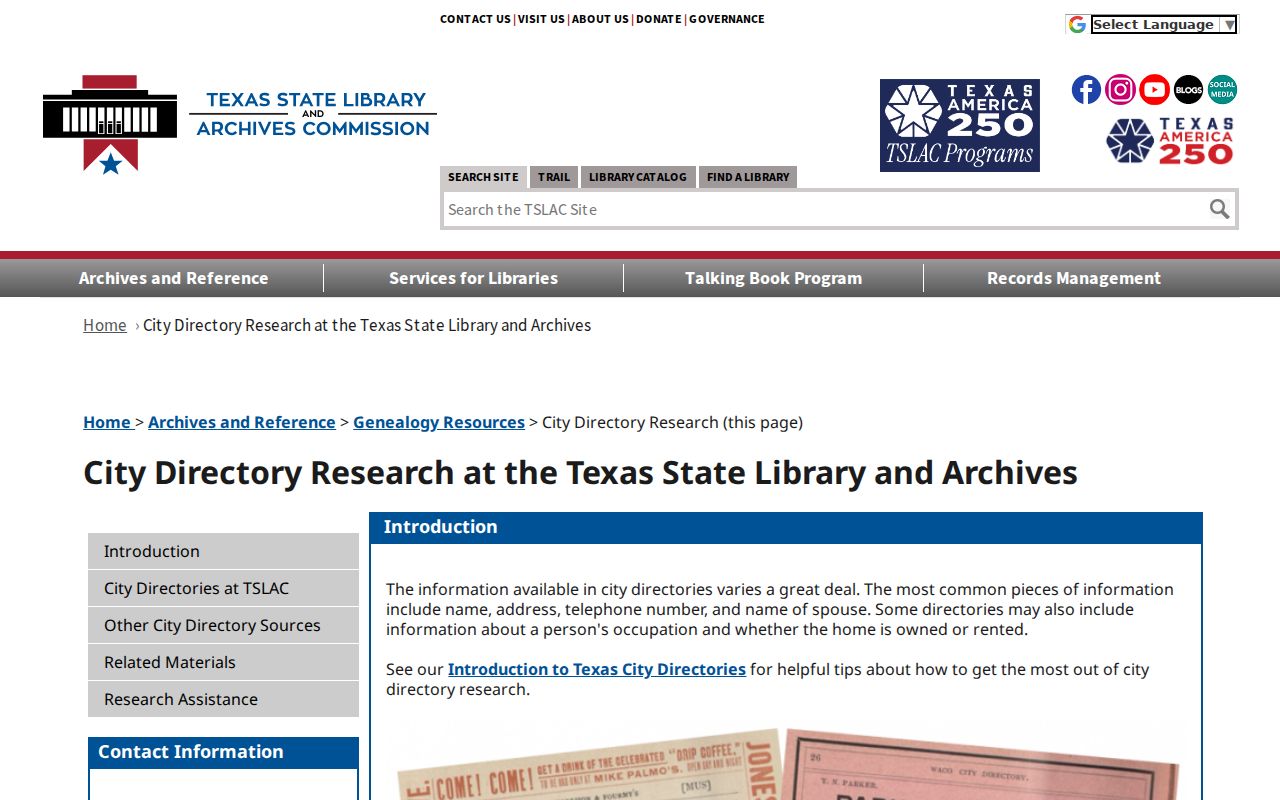
The guide helps frame a title search, while a local library or archive confirmation supplies the evidence needed for a Rockwall entry.
Note: Exact Rockwall city-directory years and publishers remain a documented research gap until a holding institution verifies them.
Reading Rockwall Directory Entries
No actual Rockwall city-directory scan was exposed in the research, so there is no verified local abbreviation key or sample line to reproduce. When a volume is found, capture what the page actually says rather than expanding an abbreviation from memory. The useful inventory below records the kinds of fields that may appear in a historical entry, while keeping each one tied to the printed page and the directory year.
| Name and spelling | Record surname, given-name form, initials, and alternate spelling exactly as printed. |
|---|---|
| Relationship clue | Preserve a spouse, widow, or other parenthetical notation only if the volume prints it. |
| Address | Keep the historical house number and street as printed, then normalize it separately for map research. |
| Business or occupation line | Capture it only as historical context from the page, not as a present-day statement. |
| Owner or renter mark | Record a symbol only if the volume’s own key defines it; do not assume one exists. |
| Citation | Save directory title, publisher, year, page, section, image or index status, and source location. |
- Criss-cross directory
- A street-order section that may list addresses rather than names. Confirm that a verified Rockwall volume actually contains one.
- Householder index
- An index organized around the person or household named in an entry. It is an index structure, not proof of every person at the address.
- Abbreviation key
- The volume’s own explanation of its printed short forms. Photograph or transcribe that key before interpreting a line.
A directory entry is strongest when a second source shares an independent key, such as the same address plus a dated deed, a newspaper issue, a census image, or a probate instrument. A surname alone is not enough to join historical records.
Trace Rockwall Directory Households
Once a verified page exists, follow a household through time with a small source log. The goal is to show how the historical evidence fits together, not to turn a historical listing into a current profile. Rockwall’s county history is especially important because courthouse fires disrupted early records and because local source runs contain known gaps.
- Record the directory title, publisher, year, page, spelling, and entry type exactly as found.
- Search the same name and historical address in the nearest available census year, retaining the source image or database citation.
- Compare the address with a dated map and a parcel’s legal description. Do not overwrite the printed street form.
- Use the deed index, tax rolls, probate index, or newspaper microfilm only where a date, address, instrument, or other independent key fits.
- Close the trail with a cited cemetery report, obituary notice, or museum source when one exists, and label it as historical evidence.
Someone disappearing from a historical source can mean a move, a death, a changed spelling, a missing issue, or no inclusion in that source. The missing 1966/67 Rockwall Success reel and the 1910–14 marriage-volume gap are reasons to check adjacent years and related record series, not reasons to make a conclusion.
Rockwall Microfilm for Directories
The County Library’s second-floor Genealogy and Periodical Room is the core local shelf for this work. Its microfilm reader is self-service, generally limited to one hour if another patron is waiting, and copies cost 15 cents. Rockwall Success begins with March through June 1886, scattered early issues, then later runs through parts of 2000. The room also lists the Rockwall Chronicle, Rockwall Express, Rockwall/Rowlett Morning News, and Rockwall County News for the stated years.
Newspapers can supply an obituary, marriage announcement, business notice, road or property notice, election story, or courthouse-fire chronology. Record the title, issue date, page, reel or database, and a short neutral description. Those citations let another researcher find the same item without turning a notice into a claim about a living person.
The County microfilm holdings page identifies the available series and their gaps.
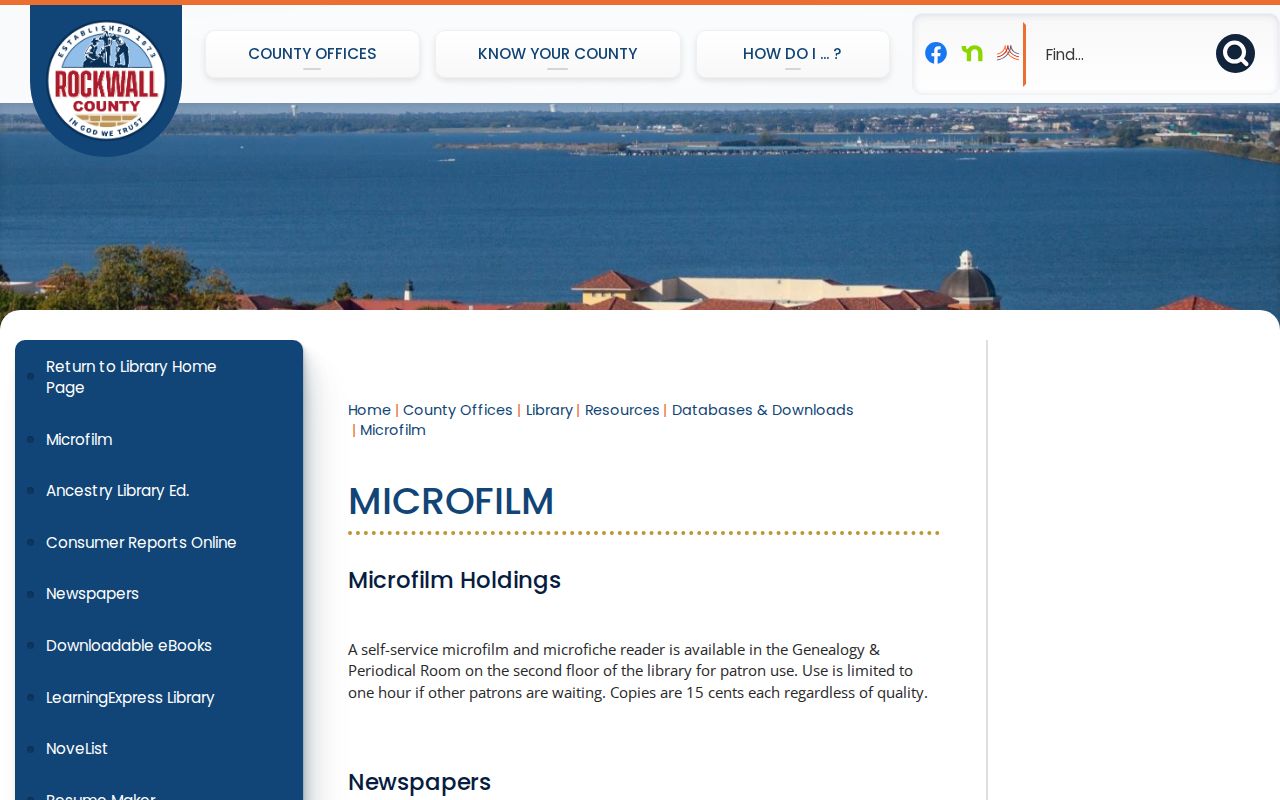
Use the holding list to plan a title or date search, then note the specific reel used because coverage is uneven across the newspaper and record series.
Rockwall Directory Map Context
Maps can bridge a printed address to its historical street form. The official historic-district collection includes a 1905 downtown-business map, a pre-1950 city map, 1912, 1954, and 1963 USGS maps, and an interactive historic-district resource. Compare the map date with the directory or newspaper date. Label a historic map as a period reference, not as a current legal boundary.
Rockwall’s local timeline gives useful context: Elijah Elgin platted the town on 40 acres in 1854, Rockwall County formed in 1873, the town incorporated in 1874, the railroad arrived in 1886, and Wells College operated from 1893 to 1912. Old Town Rockwall was recognized by Ordinance 02-26 in 2002, with 160 residential properties across 92 acres at creation and eight landmarks outside the district. Those facts help date a place, but they do not prove an individual connection to a particular address.
The Rockwall historic-map collection supplies the dated map stack.
A map comparison can suggest where to look next in a deed, plat, newspaper, or library catalogue, but the original record remains the source for an address or name.
Rockwall Records-Fire Gap
The early archival trail is scattered for a reason. Local official history records that the first courthouse burned on March 16, 1875, and the stone records annex burned on January 27, 1892. The Portal to Texas History WPA county-archives inventory, number 199, was surveyed in 1936 and verified in 1939. It is a major reconstruction lead because it describes what county archives survived after those losses.
| 1848–1873 | Kaufman County deed transcriptions are listed on TSLAC reels 1289128 and 1289129. |
|---|---|
| 1873–1901 | Rockwall deed records and direct or reverse index reels provide a historical finding path. |
| 1875 and 1892 | Courthouse and records-annex fires explain why one intact early county series should not be expected. |
| 1875–1987 | A probate index is listed, with historical probate records for 1877–1938. |
For an early Rockwall address, combine later deed books, Kaufman transfers, TSLAC reels, newspaper notices, private family papers, and the WPA inventory. A “not found” result in one collection is weak evidence when the underlying record history is distributed.
Rockwall Directory Access Routes
Beyond microfilm, the library lists Ancestry Library for in-building use and FamilySearch Affiliate access in the building. HeritageQuest, Fold3, NewsBank Texas News, AtoZdatabases, and TexShare resources have their own access conditions. Library cards are free for county residents; the FAQ says nonresidents may pay a $50 household annual fee or a $20 individual computer-only fee. Check the current policy with the library before planning a visit.
The Historical Foundation Museum at 901 E Washington is independent of city and county government. Its local-history holdings include family collections and books such as Images of America: Rockwall, Legendary Locals of Rockwall, Then & Now, and county histories. Treat a book profile as a finding aid. Cite the title and page, then verify an address or event in the underlying government or archival record.
The Rockwall County Library genealogy page describes the local research resources.
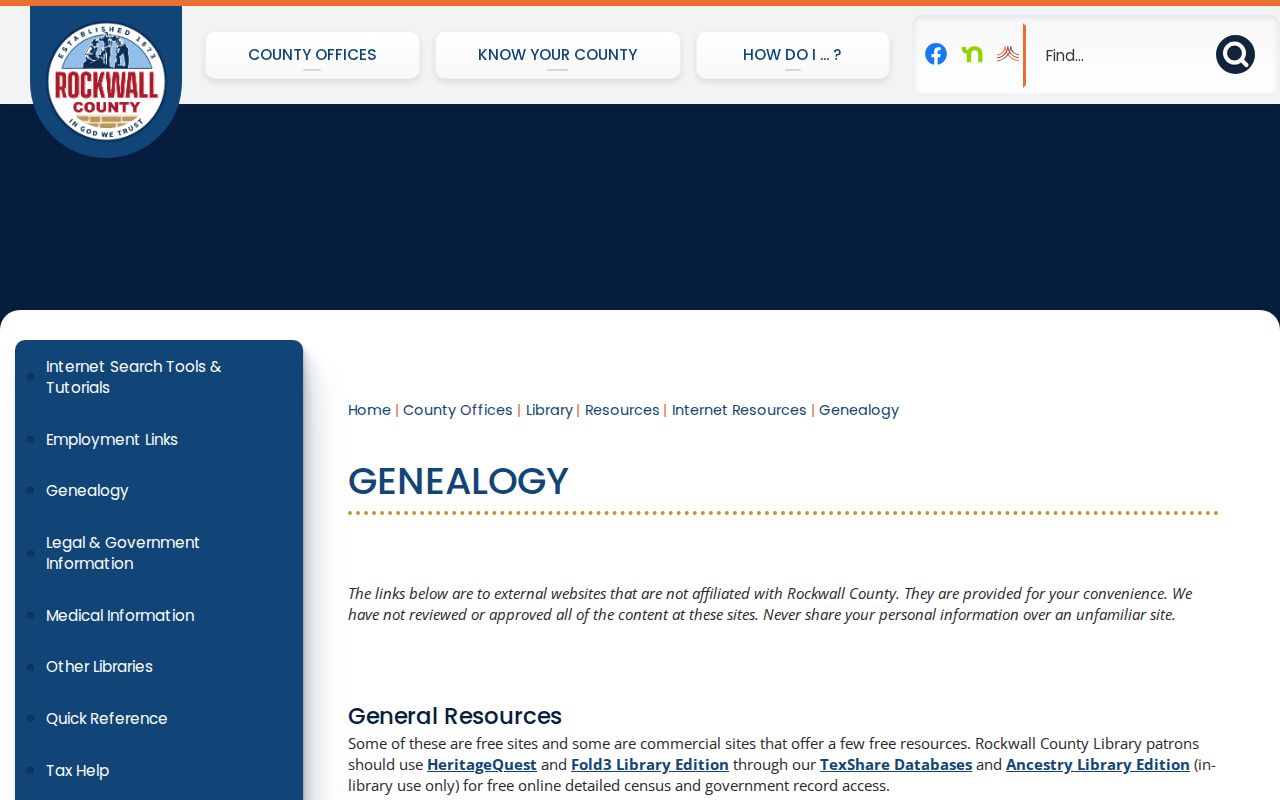
Library access adds catalogues, databases, and reader equipment to the search, while the citation should still name the exact item, image, or reel used.
Rockwall Cemetery and Newspaper Leads
The Rockwall Municipal Cemetery page links a layout or map, a report by last name, and an online burial-permit form. It identifies a roughly 130-year-old cemetery, but does not state a complete coverage date for the last-name report. A result can provide a name as displayed, section or plot if shown, burial or interment date if shown, and report date. Do not infer family relationships from a shared plot.
Pair a cemetery lead with a separately cited newspaper notice, probate index, or obituary where available. The cemetery page is a historical finding aid, not proof of a present address or a complete family record.
The Rockwall Municipal Cemetery page provides the official report and permit links.
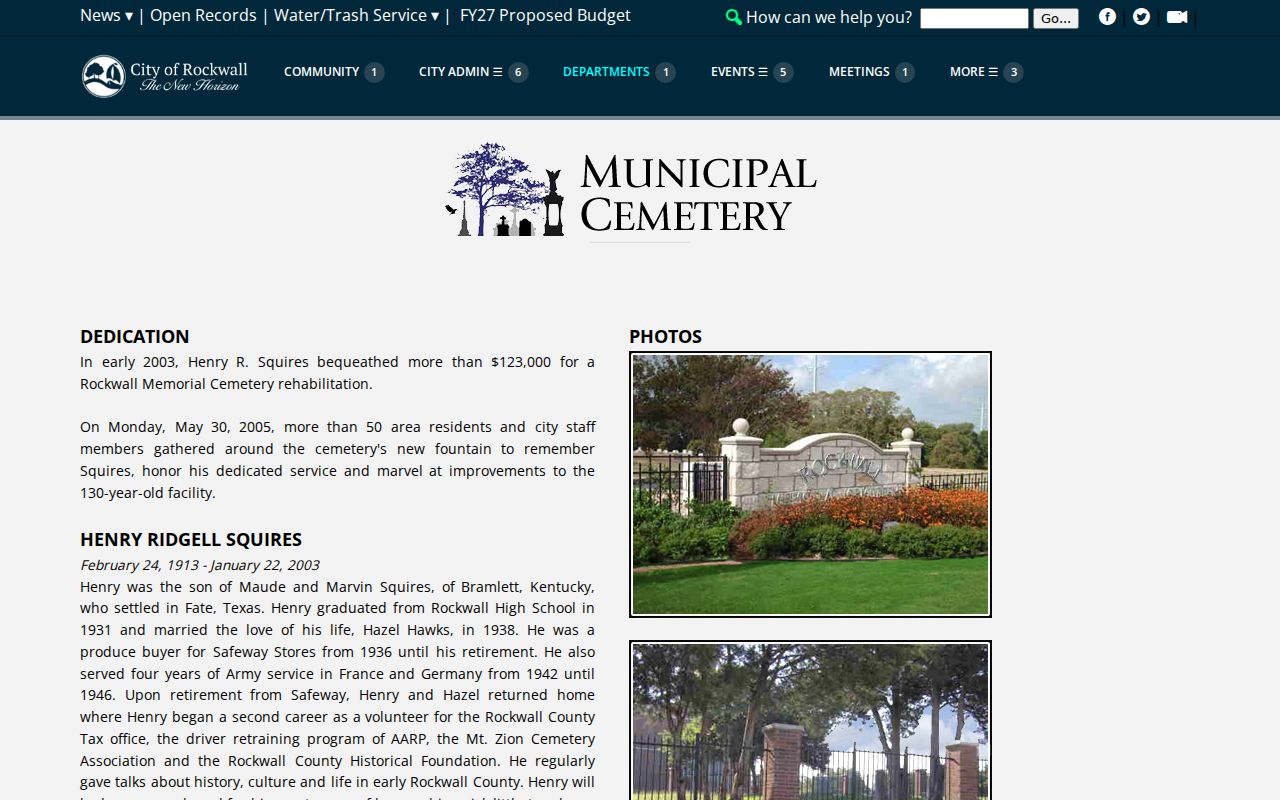
Use a reported name and date as a lead back to a source citation, while retaining the cemetery report’s unknown completeness as part of the record note.
Rockwall Directory Limits
A historical directory is not a complete roll of everyone in Rockwall. A directory may omit people, use abbreviations, lag behind a move, or record only the form selected by its publisher. The research did not confirm a Rockwall title or run, so the directory gap must remain visible until a library or archive verifies it. Historical address, relationship, or business lines should never be stated as present facts.
For a modern parcel question, use the address-first workflow on the Rockwall street directory page, where RCAD, GIS, permits, and recorded instruments are kept separate. For historical work, preserve the original source, page, year, and access date, then verify any important conclusion with the custodian or holding institution.